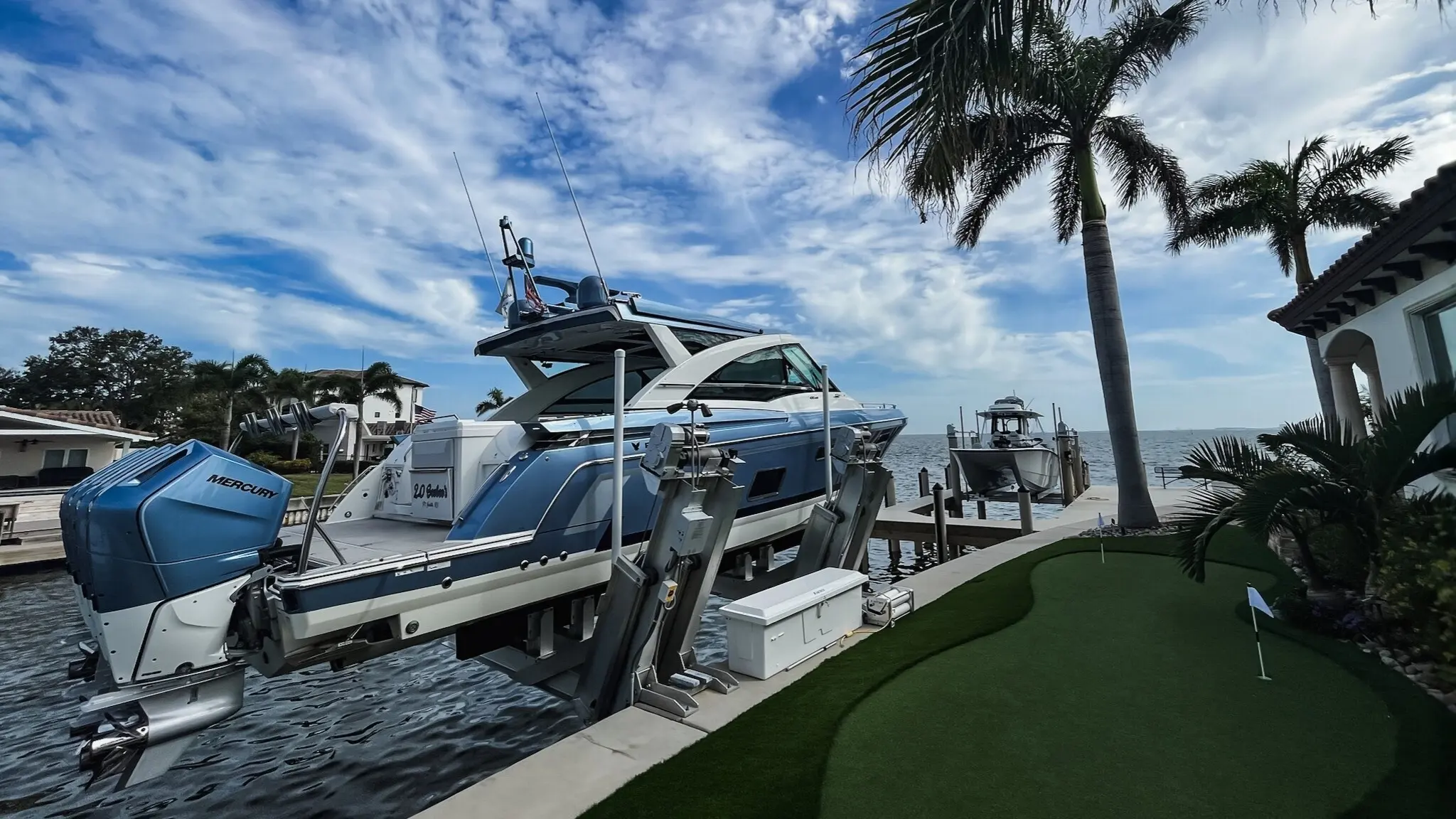
DESIGNED FOR FLORIDA WATERFRONT CONDITIONS
Saltwater and tidal environments demand more from marine infrastructure.
Neptune lift systems are engineered to perform in:
Tidal canal properties
Intracoastal waterway installations
Seawall-mounted configurations
High-salinity coastal environments
Hurricane-exposed waterfront homes
Material selection, structural reinforcement, and corrosion-resistant components are all engineered with Florida conditions in mind.
WHICH LIFT IS RIGHT FOR YOU?
Selecting the correct lift system begins with understanding your vessel and property conditions.
Narrow canal or seawall installation? → Elevator Boat Lift
Open slip between pilings? → 4-Post Boat Lift
Large yacht exceeding 40,000 lbs? → Elevator Yacht or 8-Post Yacht Lift
Low-profile architectural appearance required? → Beamless Boat Lift
Personal watercraft or light vessel? → PWC Lift System
Neptune specialists provide engineering-based consultations to determine the proper system configuration.
NEPTUNE LIFT SYSTEMS
Find the Right Neptune Lift for Your Waterfront
Every waterfront is different. Your seawall, pilings, water depth, and boat size all influence the ideal lift system. Neptune engineers lift solutions designed specifically for these real-world scenarios.
4-Post Boat Lifts

Elevator Boat Lifts

Boathouse Lifts

Beamless Boat Lifts

8-Post Yacht Lifts

Elevator Yacht Lifts

PWC Lifts

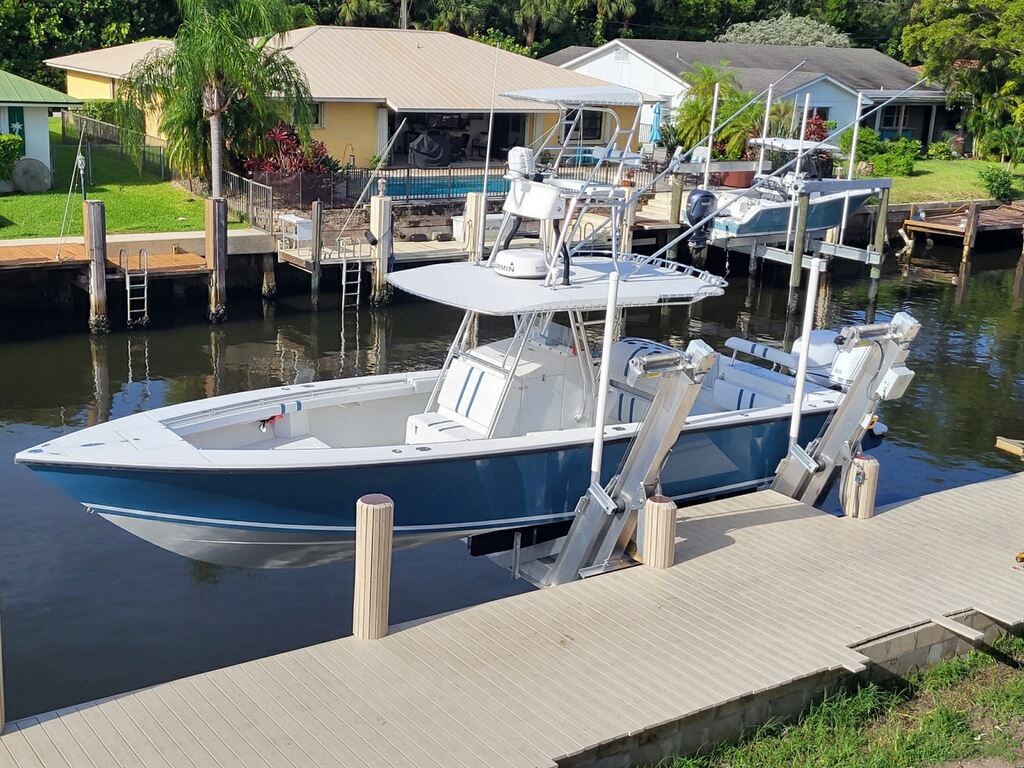
4-Post Boat Lifts
The Proven Coastal Standard
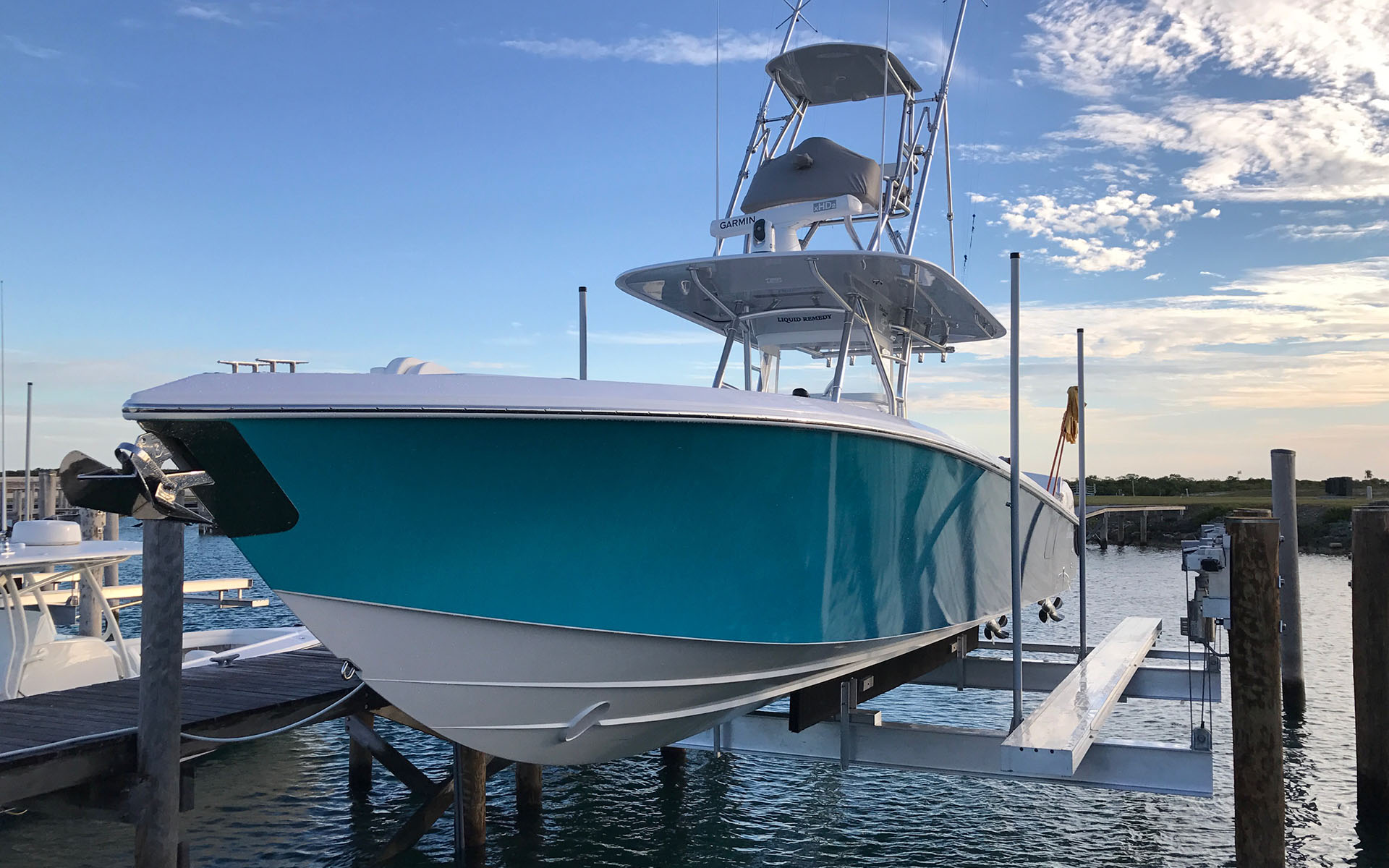
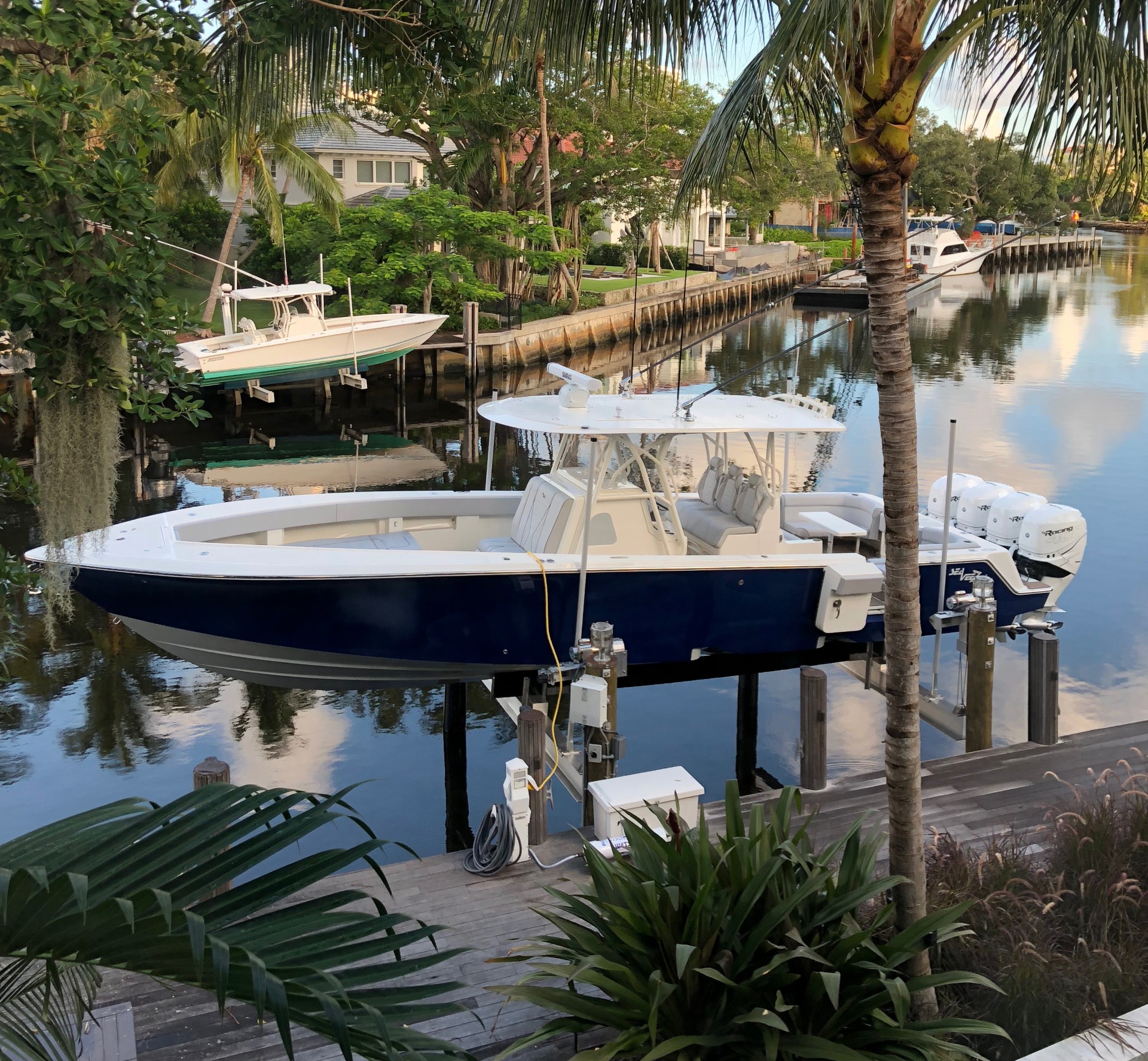
Best for open slips between pilings, Neptune’s 4-Post Boat Lifts are a trusted solution for a wide range of recreational vessels. This lift design provides balanced support and smooth lifting performance, making it ideal for center consoles, cruisers, and multi-engine boats commonly found in coastal markets.
Built with Neptune’s marine-grade aluminum structure and precision lifting components, the system delivers dependable performance in demanding saltwater environments.
Key Highlights
Up to 30,000 lb capacity
Piling-mounted installation
Ideal for center consoles, cruisers, and multi-engine boats
Durable marine-grade aluminum construction
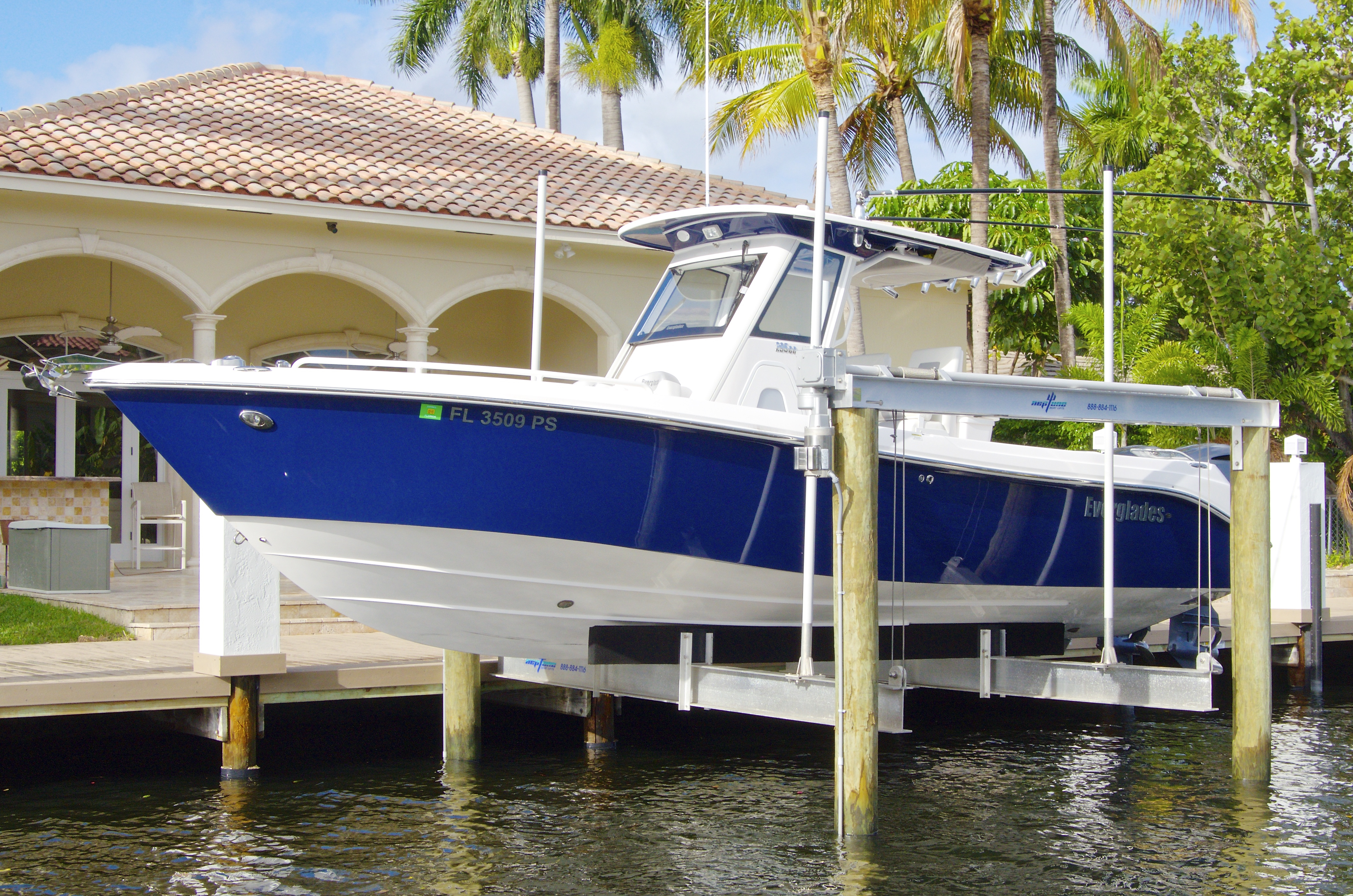
Elevator Boat Lifts
The Space-Saving Seawall Solution
Elevator Boat Lifts are engineered specifically for waterfront properties where pilings are not available or space is limited. Mounted directly to a seawall, this lift design allows boats to be raised safely above the water while maximizing usable canal space.
The elevator system travels smoothly along reinforced tracks, providing stable lifting performance while maintaining a low-profile appearance that complements canal-front homes.
Key Highlights
Up to 20,000 lb capacity
Seawall-mounted installation
Ideal for narrow canals and limited-space waterfronts
Clean, low-profile architectural design
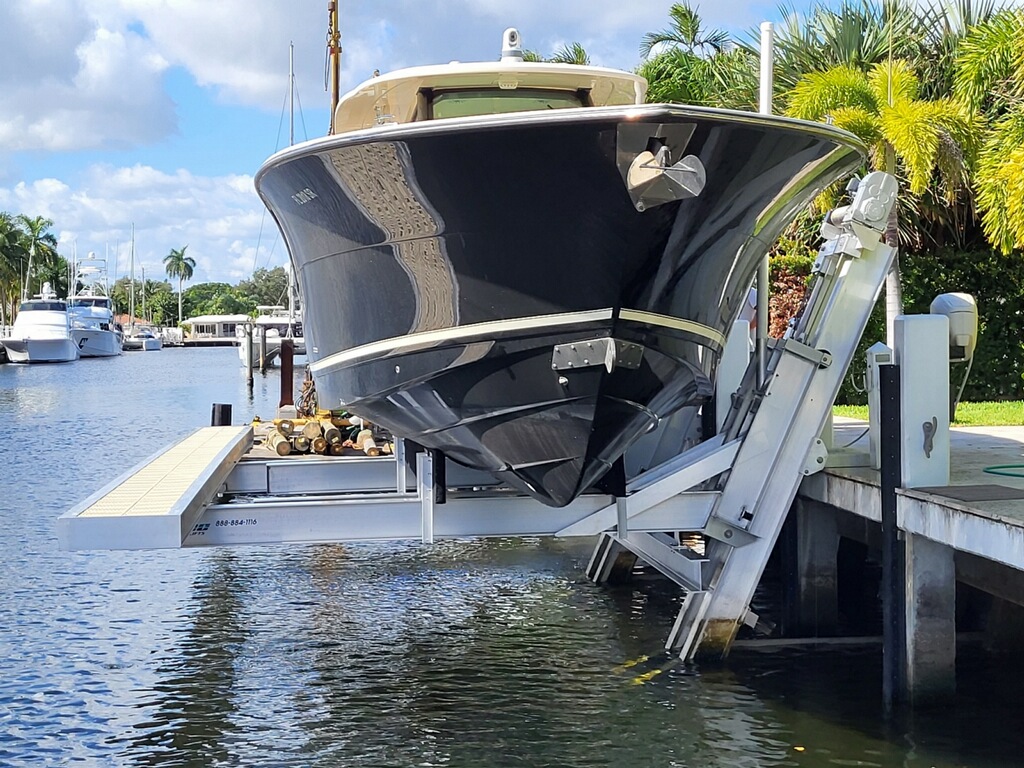
Boathouse Lifts
Engineered for Covered Slip Installations
Neptune Boathouse Lifts are designed specifically for installation inside covered slips and boathouses where space, structure, and clearance must be carefully considered. These lift systems are engineered to integrate with existing dock or boathouse structures while providing reliable lifting performance and long-term protection for your vessel.
Because every boathouse is different, Neptune systems can be configured to match the structural layout, water depth, and vessel requirements of the property. The result is a custom lift solution that keeps boats safely elevated while maintaining the functionality and aesthetics of the boathouse.
Key Highlights
Up to 30,000 lb capacity (typical configurations)
Designed for covered slips and boathouse structures
Custom engineered for structural compatibility
Ideal for protected waterfront installations
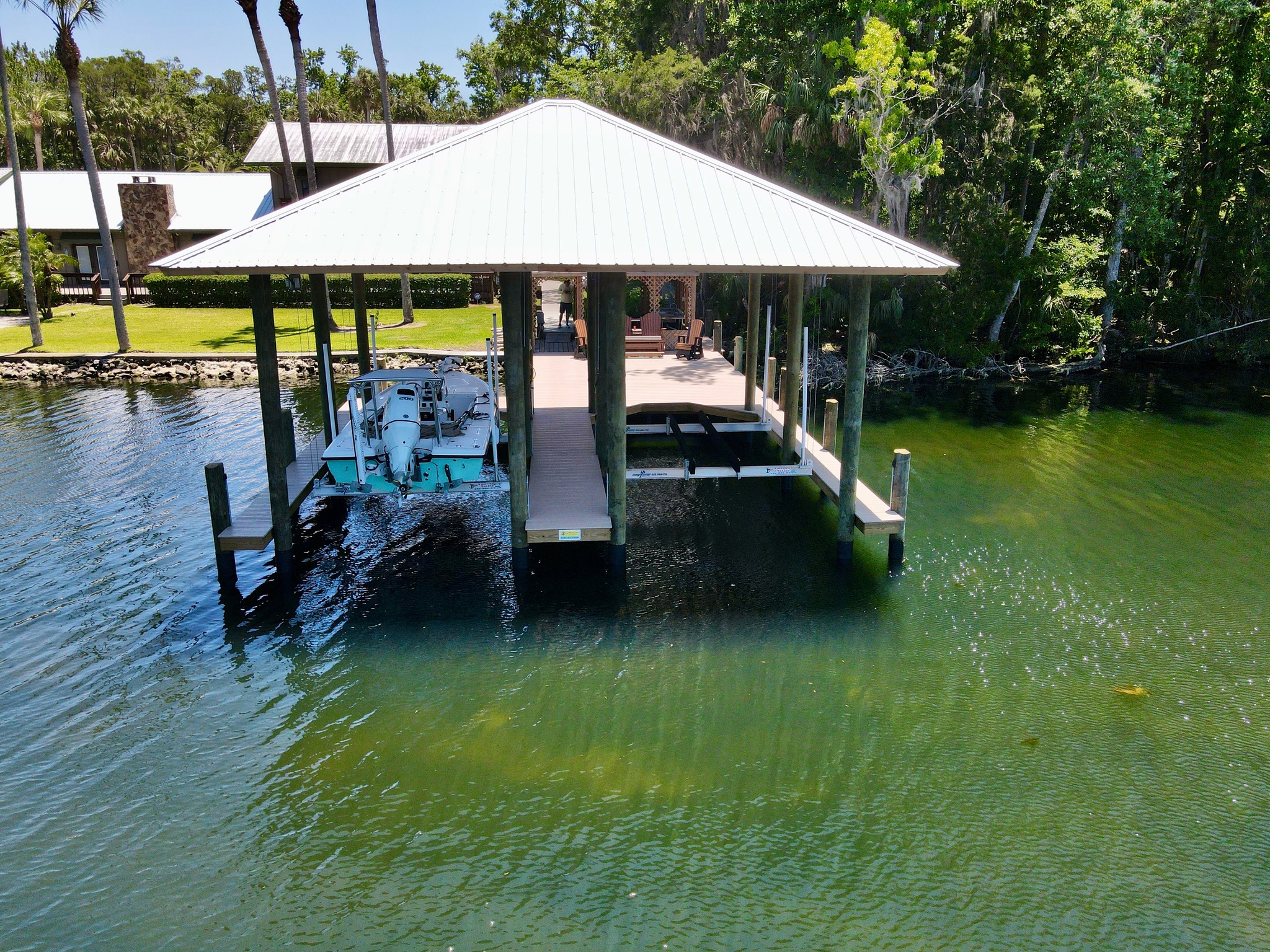
Beamless Boat Lifts
Clean Lines for High-End Waterfront Homes
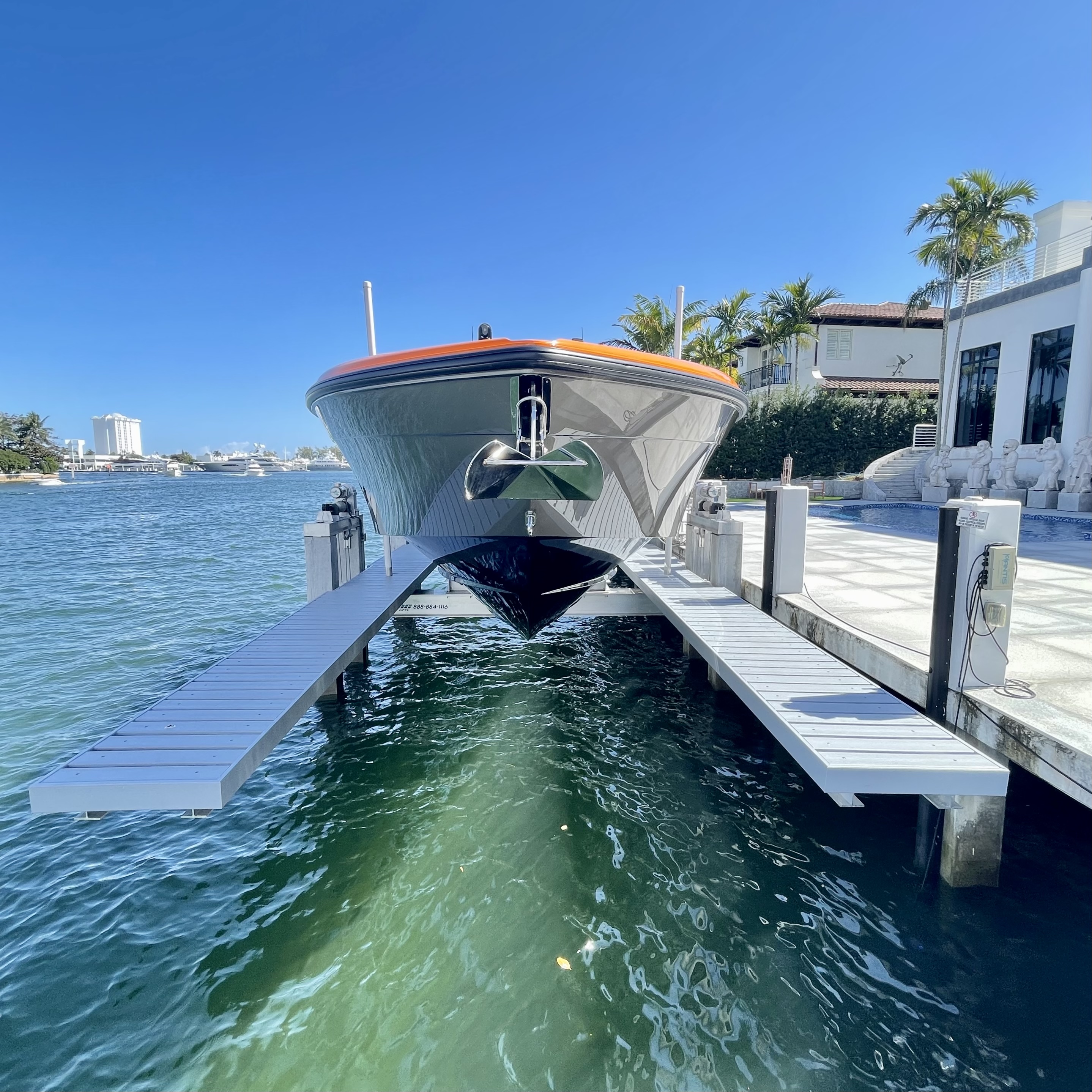
Beamless Boat Lifts offer a refined alternative to traditional lift designs by eliminating the front beam typically found on piling-mounted lifts. This creates a more open waterfront view while maintaining the structural integrity required to safely lift large boats.
The result is a lift system that blends performance and aesthetics—perfect for luxury waterfront homes where both engineering and appearance matter.
Key Highlights
Up to 30,000 lb capacity
Piling-mounted installation
Open, beamless front design
Ideal for modern architectural waterfront properties
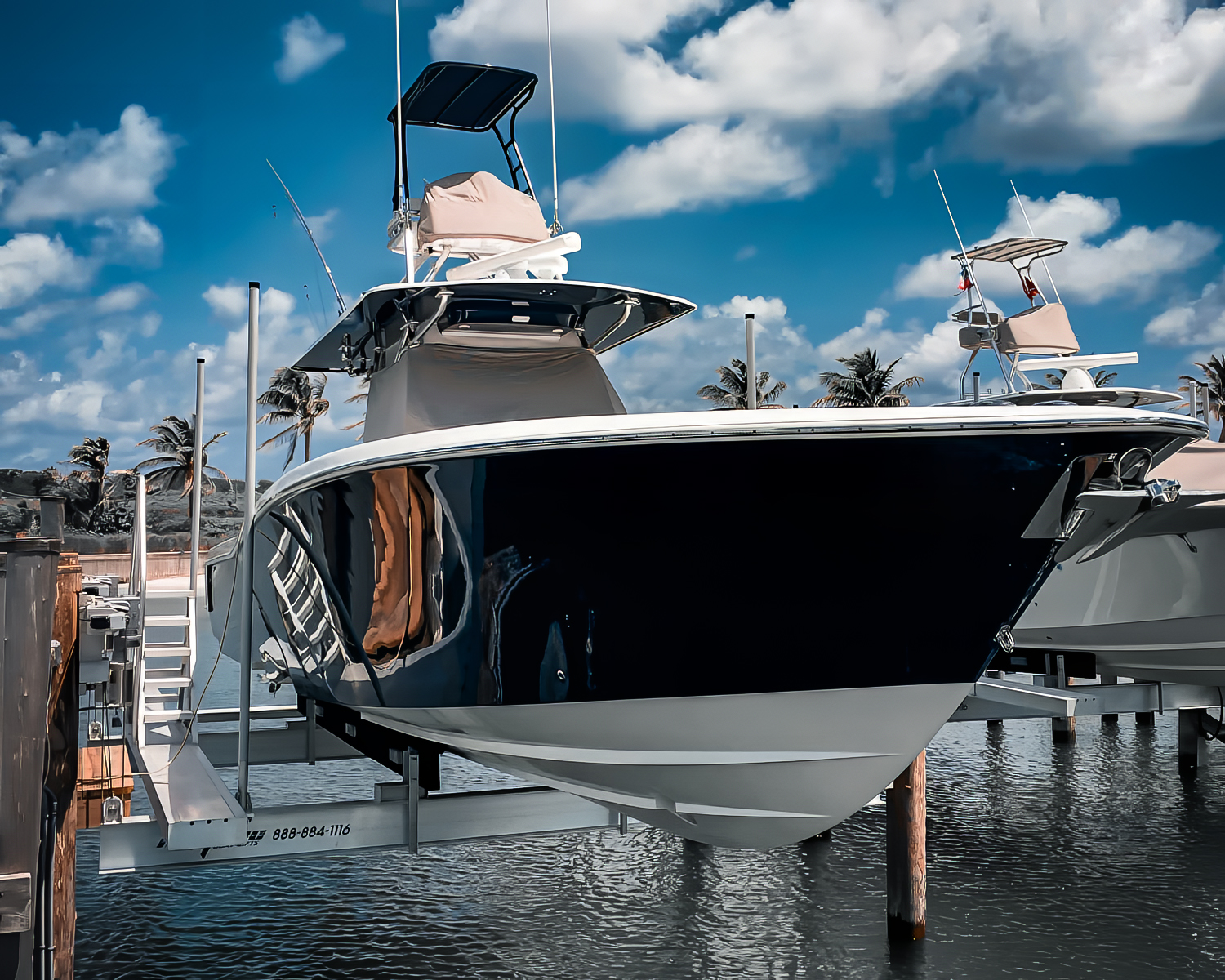
8-Post Yacht Lifts
Extreme Lifting Power for Large Yachts
For the largest vessels on the water, Neptune 8-Post Yacht Lifts deliver exceptional lifting strength and stability. This industrial-grade system distributes heavy loads across eight pilings, creating a balanced structure capable of lifting sportfish, motor yachts, and other large offshore vessels.
Custom-engineered configurations allow the lift to be tailored to the specific slip layout, vessel dimensions, and waterfront conditions.
Key Highlights
Up to 300,000 lb capacity
Industrial-duty lifting structure
Piling-mounted installation
Designed for large yachts and sportfish vessels
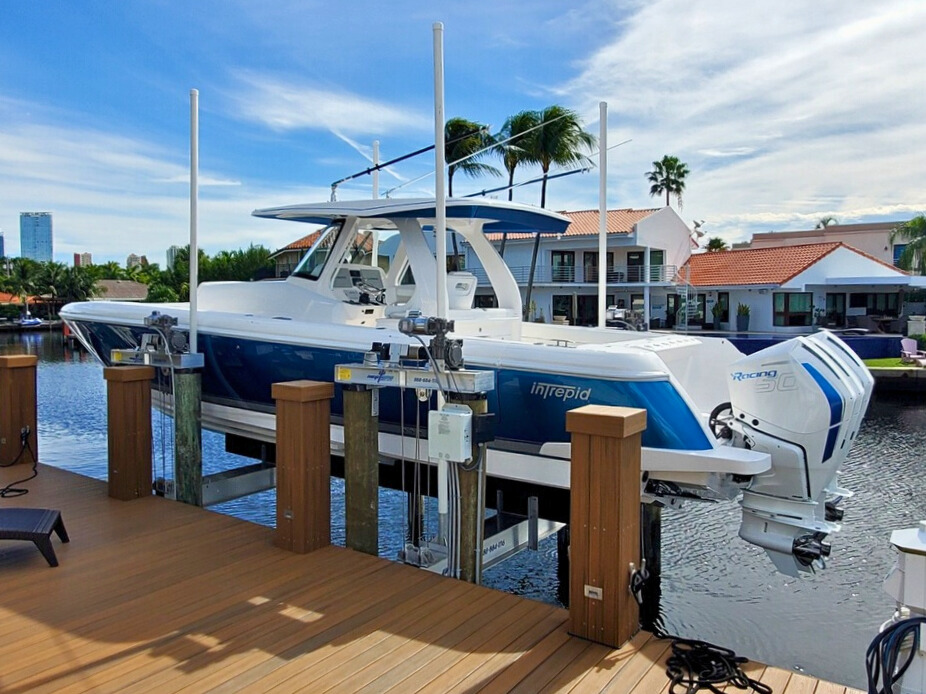
Elevator Yacht Lifts
Heavy-Duty Seawall Yacht Lifting
Designed for larger vessels in canal environments, Neptune Elevator Yacht Lifts provide the lifting power required for heavy yachts while utilizing a seawall-mounted configuration. This system is reinforced to manage significantly greater loads while maintaining the smooth operation expected from Neptune lift systems.
For waterfront properties without pilings, elevator yacht lifts offer a powerful and efficient solution for protecting large vessels from tide changes, marine growth, and storm surge.
Key Highlights
Up to 72,000 lb capacity
Heavy-duty reinforced elevator system
Seawall-mounted installation
Ideal for motor yachts and large vessels
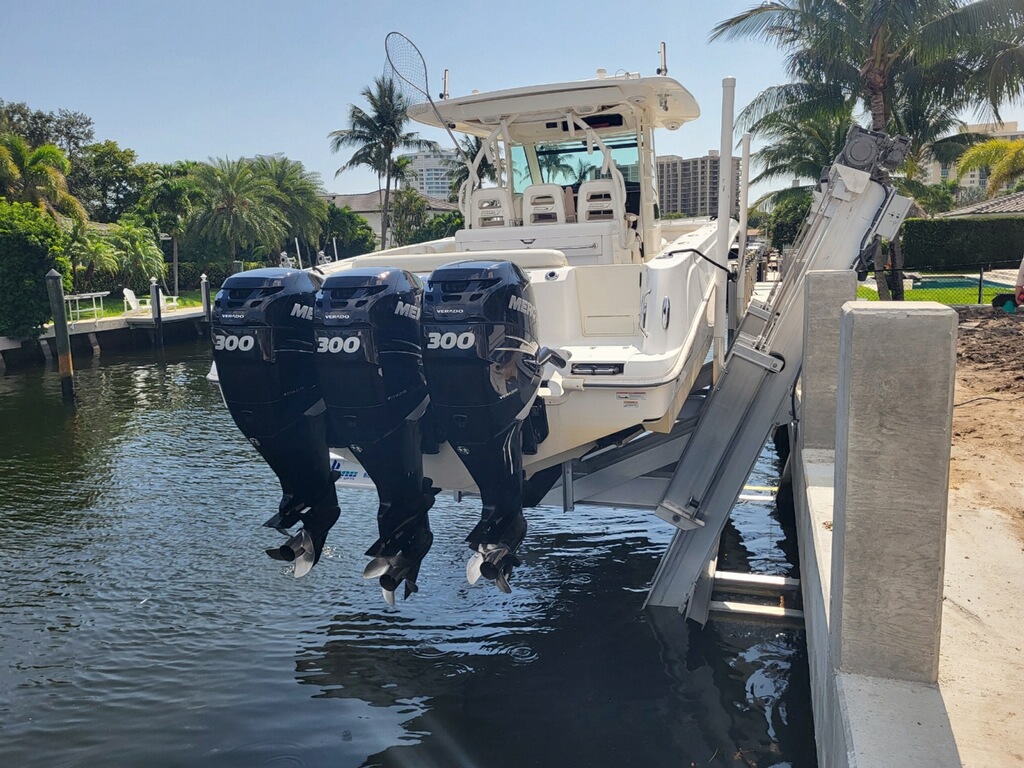
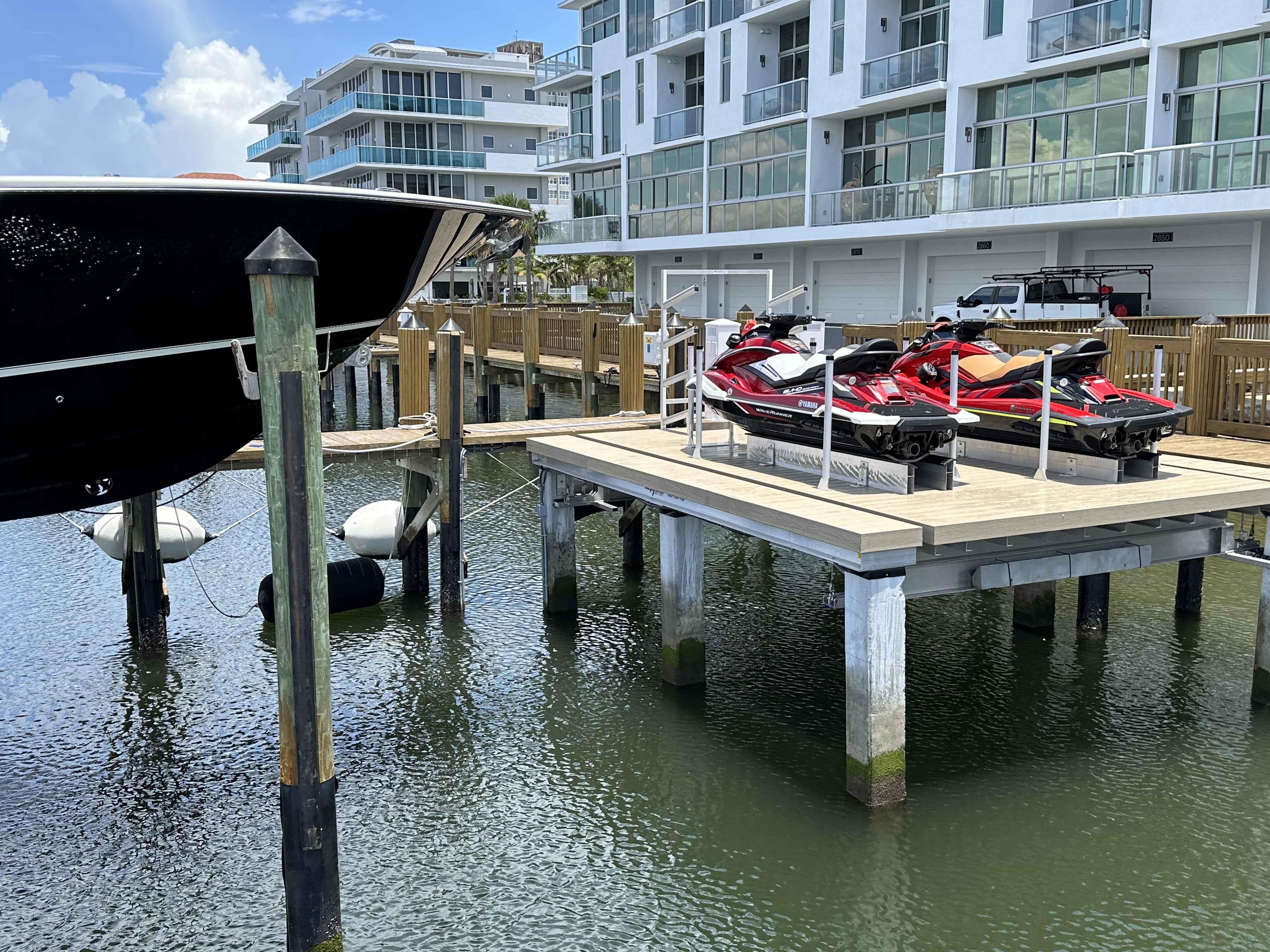
PWC Lifts
Compact Protection for Personal Watercraft
Neptune PWC Lifts provide an efficient way to protect jet skis and smaller recreational watercraft from constant water exposure. These compact systems lift personal watercraft out of the water to reduce hull growth, corrosion, and maintenance.
Designed for flexible installation on docks or pilings, PWC lifts are an ideal addition for waterfront homes with multiple watercraft.
Key Highlights
Up to 10,000 lb capacity
Dock-mounted or piling-mounted installation
Compact footprint
Ideal for jet skis and small watercraft
Quick Comparison Chart
Lift Type | Best Waterfront | Capacity Range | Mounting |
|---|---|---|---|
4-Post | Pilings / Open Slips | Up to 30,000 lbs | Piling |
Elevator | Seawalls / Canals | Up to 20,000 lbs | Seawall |
Elevator Yacht | Seawalls | Up to 72,000 lbs | Seawall |
8-Post | Yacht Slips | Up to 300,000 lbs | Pilings |
Beamless | Luxury Waterfront | Up to 30,000 lbs | Pilings |
PWC | Docks / Small Slips | Up to 10,000 lbs | Dock or piling |
Not Sure Which Lift Is Right for Your Waterfront?
Neptune can help evaluate your waterfront structure, vessel weight, and installation requirements to recommend the ideal lift system.
STRUCTURAL ENGINEERING THAT GOES BEYOND STANDARD LIFTS
Neptune lift systems are designed with:
Load-distribution calculations for heavy vessels
Reinforced cradle support systems
Structural safety margin considerations
Direct drive efficiency analysis
Corrosion-resistant material selection
Neptune does not manufacture generic lift kits. Each system is engineered as marine infrastructure.
HOW TO SIZE YOUR BOAT LIFT
Lift sizing is based on more than vessel length.
Neptune specialists evaluate:
Fully loaded vessel weight (fuel, water, gear)
Beam width and hull design
Waterfront installation type
Environmental exposure
Structural requirements
Proper lift sizing ensures safe operation and long-term performance.
FREQUENTLY ASKED QUESTIONS
What is the difference between elevator, 4-post, and 8-post boat lifts?
4-post lifts are typically installed between pilings in open slips. Elevator lifts are mounted along seawalls where piling installation is limited. 8-post yacht lifts are engineered for large vessels requiring increased structural support and higher load capacity.
How do I size a boat lift for my boat?
Lift sizing is based on the vessel’s total loaded weight, beam width, hull configuration, and waterfront installation type. A Neptune consultation ensures appropriate structural margin and engineering alignment.
What are the best boat lifts for saltwater?
Saltwater boat lifts should be constructed from marine-grade aluminum with corrosion-resistant hardware and sealed drive systems. Neptune lift systems are engineered specifically for high-salinity coastal environments.
How much does a saltwater boat lift cost?
Saltwater lift pricing varies based on vessel weight, lift type, waterfront conditions, and custom engineering requirements. Neptune provides consultation-based recommendations to ensure proper system configuration.
Are aluminum boat lifts better for saltwater?
Marine-grade aluminum provides superior corrosion resistance compared to untreated steel systems, making it well-suited for coastal and saltwater installations.

VIEW PRODUCT BROCHURE

