Why Lift Capacity Matters
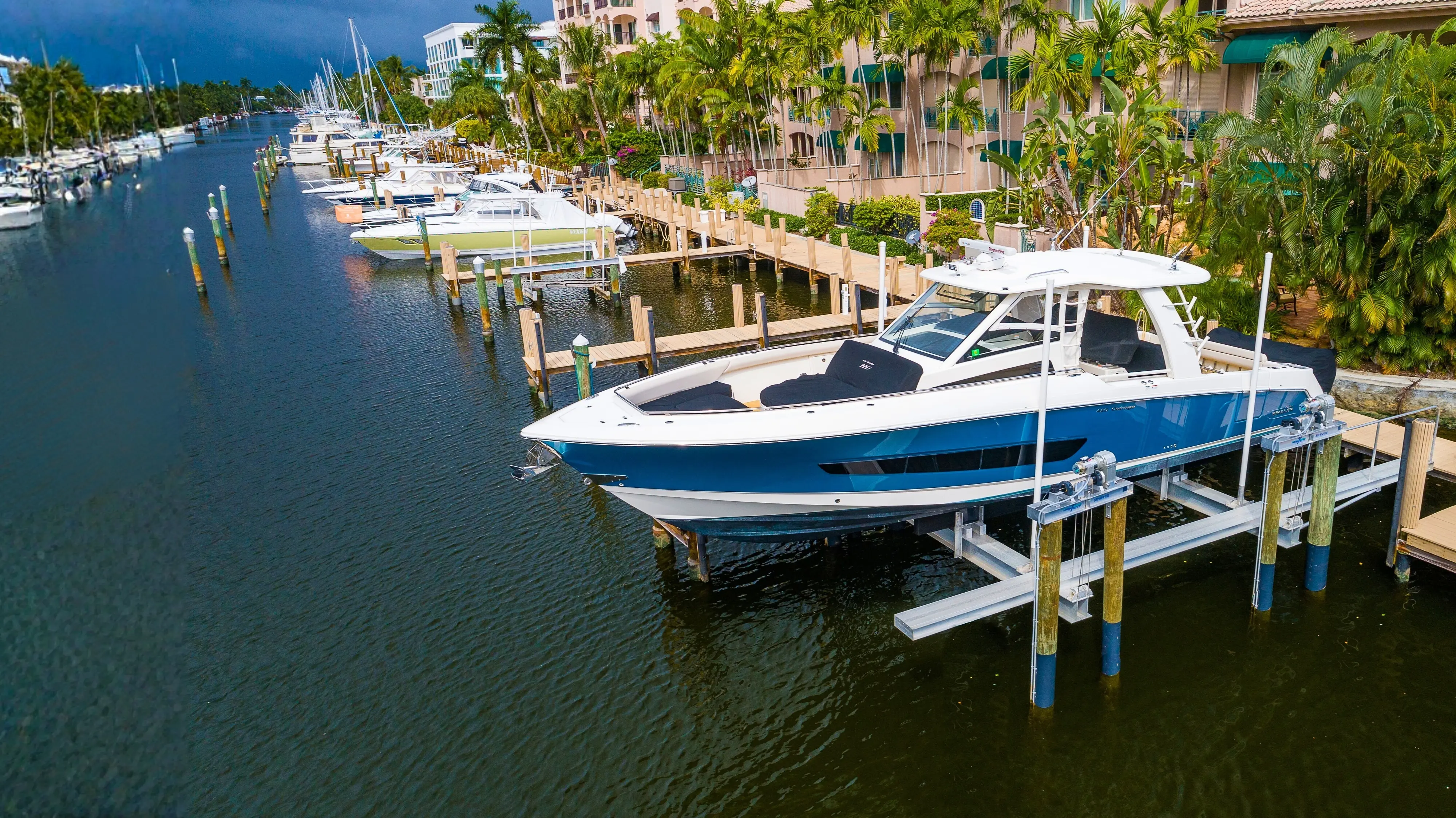
Boat lifts are engineered to safely raise and support the full weight of a vessel while it is stored out of the water. Selecting the correct lift capacity ensures the lift operates smoothly and reduces strain on mechanical components.
Properly sized lifts provide several advantages:
Safe lifting and storage
Improved lift reliability
Reduced wear on cables and drive systems
Better long-term performance
For larger vessels, accurate lift sizing becomes even more important due to the increased weight and structural requirements involved.
Understanding Boat Weight
Many boat owners initially look at the dry weight listed by the manufacturer when determining lift capacity. However, the actual weight of a vessel when stored on a lift is often significantly higher.
Several additional factors contribute to total boat weight.
Fuel and Water: Fuel tanks and freshwater systems can add hundreds or even thousands of pounds depending on the vessel size.
Batteries and Equipment: Modern boats often carry multiple batteries, electronics, generators, and other equipment that add substantial weight.
Gear and Accessories: Fishing equipment, anchors, safety gear, coolers, and other accessories also contribute to the overall weight of the boat.
Engines: Outboard motors and propulsion systems are often heavier than many owners expect. Larger offshore boats may carry multiple engines, significantly increasing total weight.
Other Factors That Affect Lift Selection
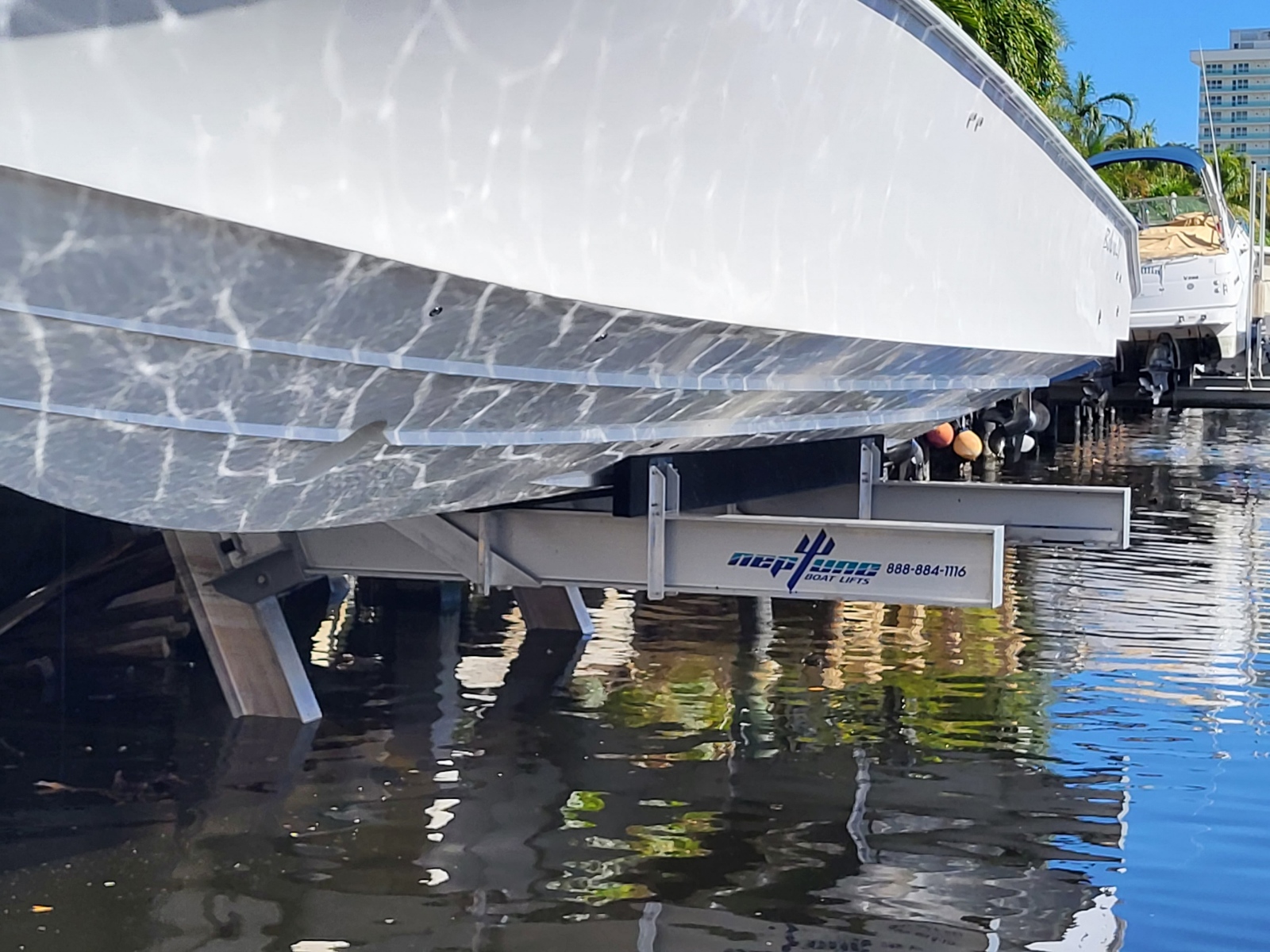
While lift capacity is critical, several other factors also influence the correct lift configuration.
Beam Width: Wider vessels require lifts with appropriate bunk spacing and structural support.
Water Depth: Water depth affects cradle travel and overall lift configuration.
Dock Layout: The structure of the dock or seawall may determine which lift style can be installed.
Waterfront Conditions: Tidal movement, wave action, and environmental exposure may influence the lift design and installation method.
Yacht Lift Types for Larger Vessels
Larger vessels often require specialized lift systems designed for increased weight and beam width.
8 Post Yacht Lifts
Eight-post yacht lifts provide the structural support required for large vessels. These systems distribute weight across multiple pilings and lifting points to maintain stability.
Common applications include:
Luxury yachts
Large sportfish boats
High-capacity lift installations
Elevator Yacht Lifts
Elevator yacht lifts are often used in locations where traditional pilings cannot be installed, such as seawall properties or narrow canal waterfronts.
These systems mount directly to the dock structure and raise the vessel vertically.
Explore Neptune Yacht Lift Systems
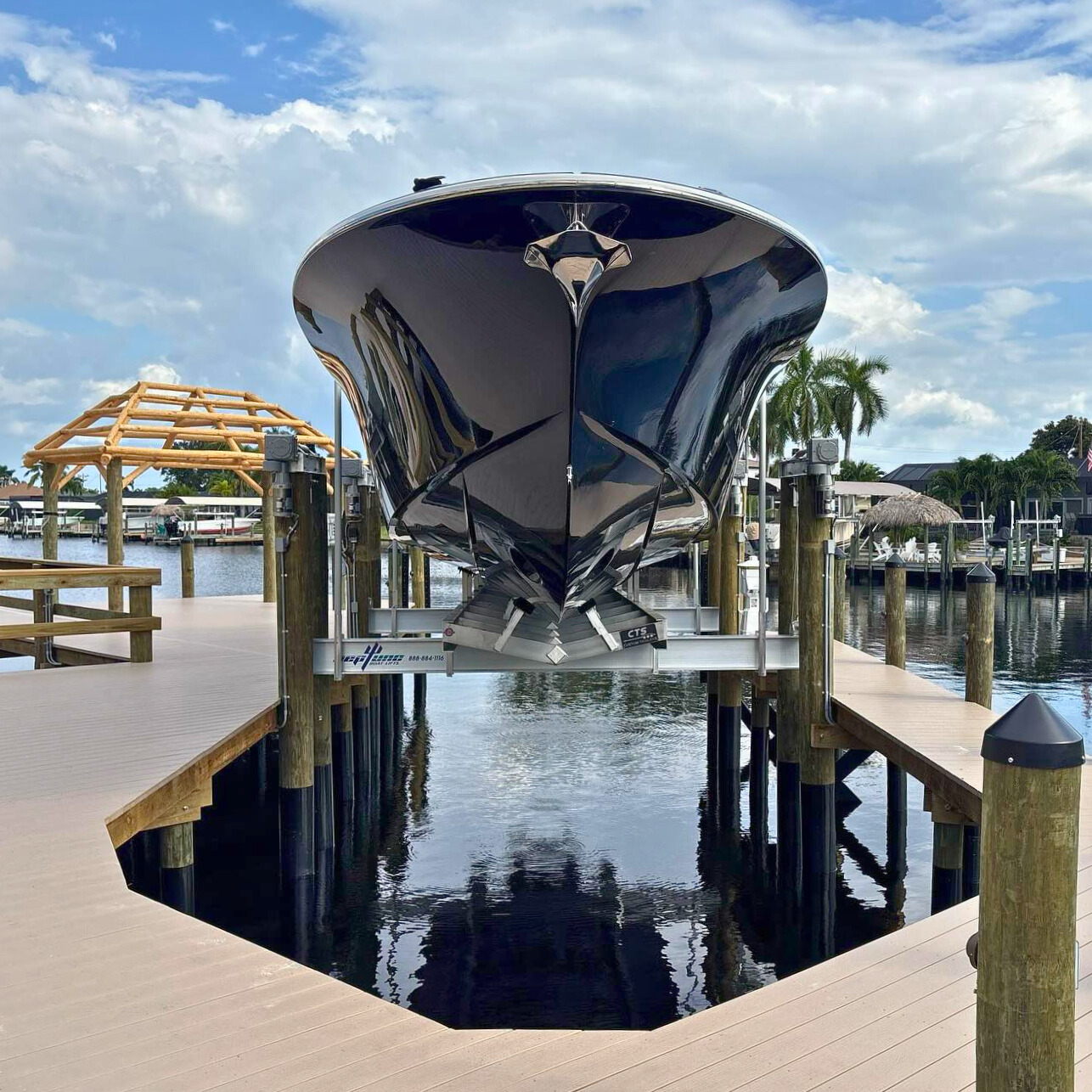
Neptune Boat Lifts designs high-capacity lift systems engineered for large vessels and demanding marine environments.
Explore lift solutions including:
When to Consult a Lift Professional
Because yacht lift installations involve structural considerations, consulting an experienced marine lift professional is recommended when selecting a lift system.
A dealer can evaluate:
Vessel specifications
Dock structure
Waterfront conditions
Lift capacity requirements
This ensures the lift system is properly configured for safe long-term operation.
Recommended Lift Capacity Buffer
Because the total weight of a boat often exceeds the manufacturer’s listed dry weight, lift systems are typically sized with additional capacity.
A common guideline is to select a lift with at least 20–30% more capacity than the boat’s estimated total weight. This safety margin helps ensure the lift operates efficiently and reduces mechanical stress on the system.
FAQ SECTION
How much lift capacity do I need for my boat?
Lift capacity should exceed the total weight of the boat, including fuel, equipment, and accessories. Many installers recommend selecting a lift with 20–30% more capacity than the estimated boat weight.
Is boat dry weight the same as lift weight?
No. Dry weight typically does not include fuel, batteries, equipment, or gear. The actual lift weight is often significantly higher than the listed dry weight.
Can a lift be too large for a boat?
While extremely oversized lifts may be unnecessary, selecting a lift with additional capacity is generally recommended to ensure safe operation and long-term reliability.
What lift is used for large yachts?
Large yachts typically use 8-post yacht lifts or elevator yacht lifts designed to handle higher weight capacities and wider vessels


