Boat Lift Hurricane Preparation Guide

How to Prepare Your Boat, Lift, Dock, and Electrical System Before Severe Weather

Hurricane season is an important time for waterfront homeowners to inspect, prepare, and protect their boat lift system. While Neptune Boat Lifts are engineered for demanding marine environments, hurricanes and severe storms can create conditions that exceed normal operating loads. High winds, storm surge, rapidly changing water levels, wave action, and floating debris can all place stress on boats, docks, lifts, electrical systems, and surrounding waterfront structures.

Preparing ahead of time can help reduce the risk of damage, improve safety around the dock, and make post-storm recovery easier. Every property is different, so boat owners should always follow local emergency guidance, insurance requirements, dealer recommendations, and the owner’s manual for their specific lift system.

This guide is intended as general preparation information only. Severe weather can damage any waterfront structure, and no preparation method can guarantee protection from hurricane conditions.

Why Hurricane Preparation Matters

Boat lifts are built to handle regular marine use, but hurricanes introduce forces far beyond everyday lifting, launching, and storage. Strong winds can turn unsecured dock items into debris. Rising water can carry floating objects into lift structures. Storm surge can submerge components that are normally above the waterline. Electrical systems may also be exposed to moisture, flooding, or power surges.

Preparing your lift system ahead of time can help:

  • Reduce damage to lift components

  • Protect the boat and dock structure

  • Prevent equipment from shifting during storms

  • Minimize post-storm repairs

Planning ahead is one of the most effective ways to protect your waterfront investment.

Preparing Your Lift for Hurricane Season

The best time to prepare is before a storm is approaching. Once watches or warnings are issued, marine service providers may be unavailable, haul-out options may be limited, and waterfront conditions may become unsafe.

ChatGPT Image May 7, 2026, 08_27_56 AM (2).png

Step 1: Inspect the Lift Before Hurricane Season

Before hurricane season begins, inspect your boat lift carefully. A pre-season inspection can help identify wear, corrosion, loose hardware, or operational issues before severe weather arrives.

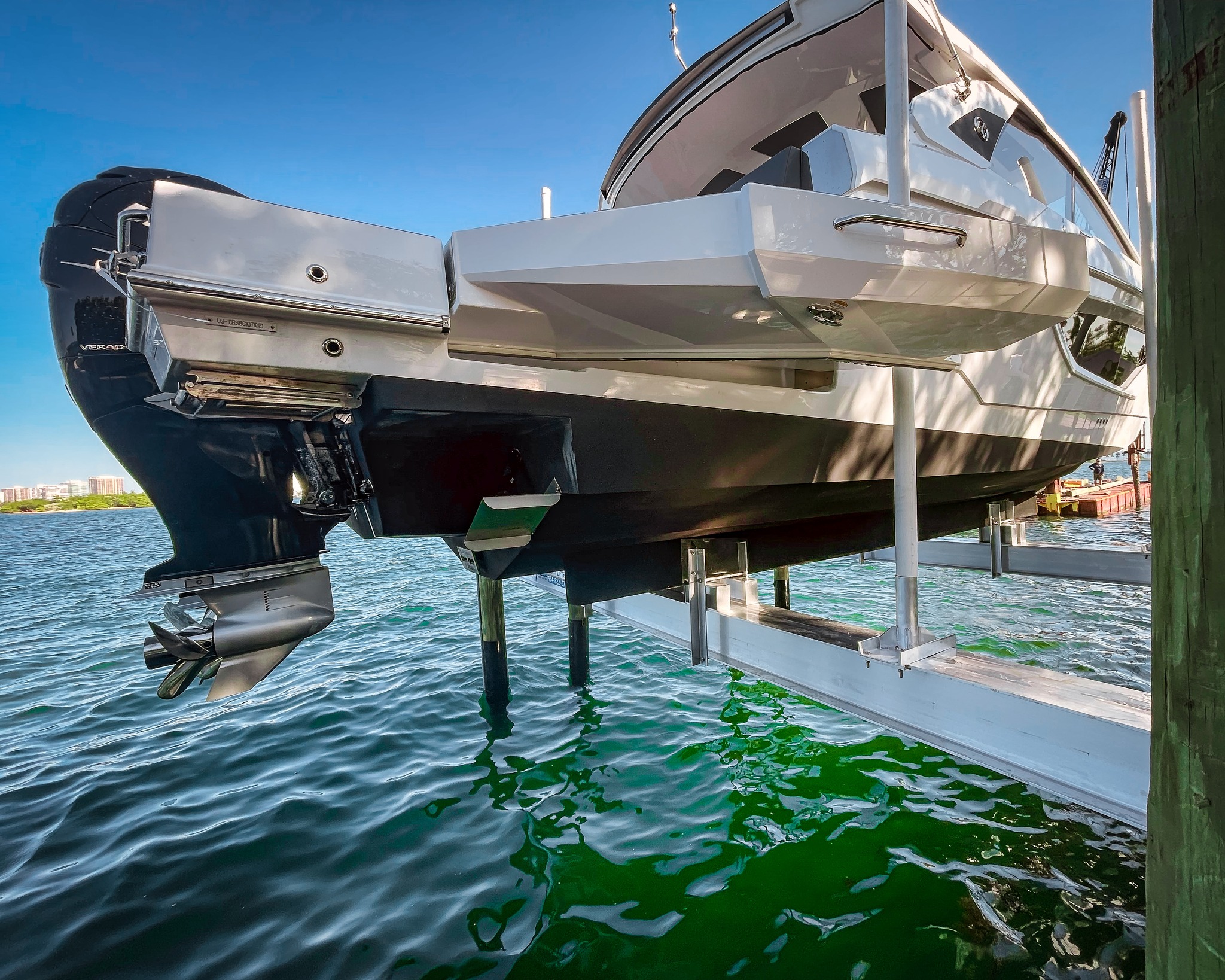
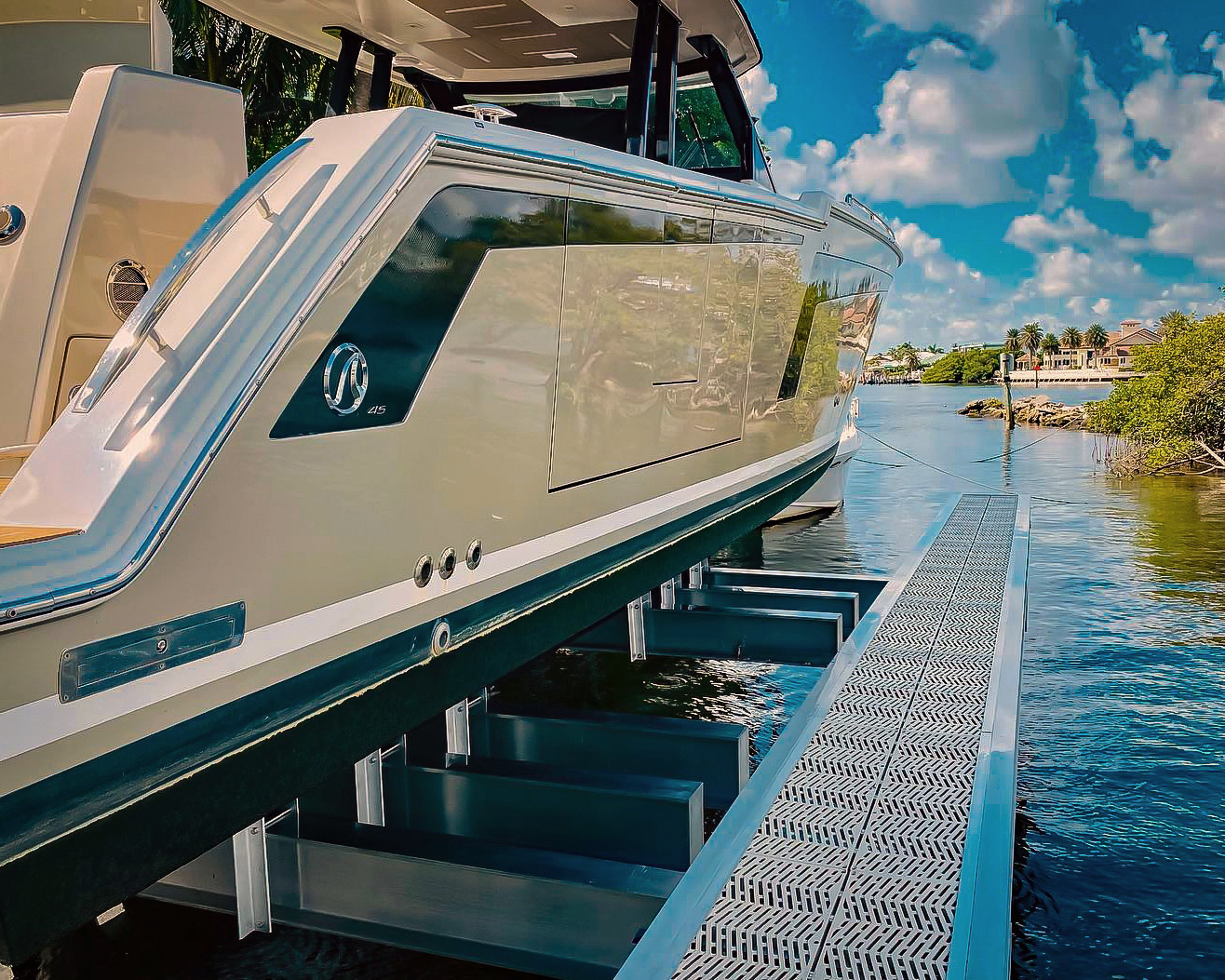
Boat owners should look over the lift cables, pulleys, sheaves, winders, bunks, cradle, guide poles, fasteners, structural hardware, motors, control units, electrical connections, and dock or piling attachment points. Any signs of frayed cable, corrosion, damaged hardware, loose bolts, uneven movement, or electrical wear should be addressed before the lift is relied on during storm season.

This is also a good time to confirm that the boat is sitting correctly on the lift, the bunks are properly aligned, and the lift is operating smoothly through its normal range of travel.

ChatGPT Image May 7, 2026, 08_27_56 AM (4).png

Step 2: Consider a Professional Lift Inspection

A professional inspection before hurricane season can provide additional peace of mind, especially for older lifts, large-capacity lifts, yacht lifts, elevator lifts, boathouse lifts, or systems that have not been serviced recently.

A qualified marine lift technician can evaluate structural components, cable condition, drive systems, electrical systems, guide systems, mounting hardware, and overall lift operation. Routine inspections may help identify maintenance needs before they become larger problems.

If your lift has shown signs of uneven movement, unusual noise, slow response, control issues, corrosion, or cable wear, schedule service before storm season rather than waiting until a storm is approaching.

ChatGPT Image May 7, 2026, 08_20_40 AM.png

Step 3: Remove or Secure Loose Items

Before a storm approaches, remove or secure loose items on the dock, around the lift, and near the waterfront. Dock furniture, coolers, fishing gear, cleaning supplies, cushions, portable equipment, loose lines, buckets, ladders, and other unsecured items can become airborne in high winds or floating debris during storm surge.

Clearing the dock area helps reduce the risk of damage to boats, lifts, docks, neighboring properties, and nearby structures. Anything that cannot be removed should be secured as safely as possible according to local storm preparation guidance.

This step is simple, but it can make a meaningful difference. Many storm-related damages come from loose objects moving through the waterfront area.

ChatGPT Image May 7, 2026, 08_27_56 AM (3).png

Step 4: Decide What to Do With the Boat

Boat owners may choose different storm preparation strategies depending on storm severity, surge forecast, dock layout, vessel size, lift type, local guidance, and insurance requirements.

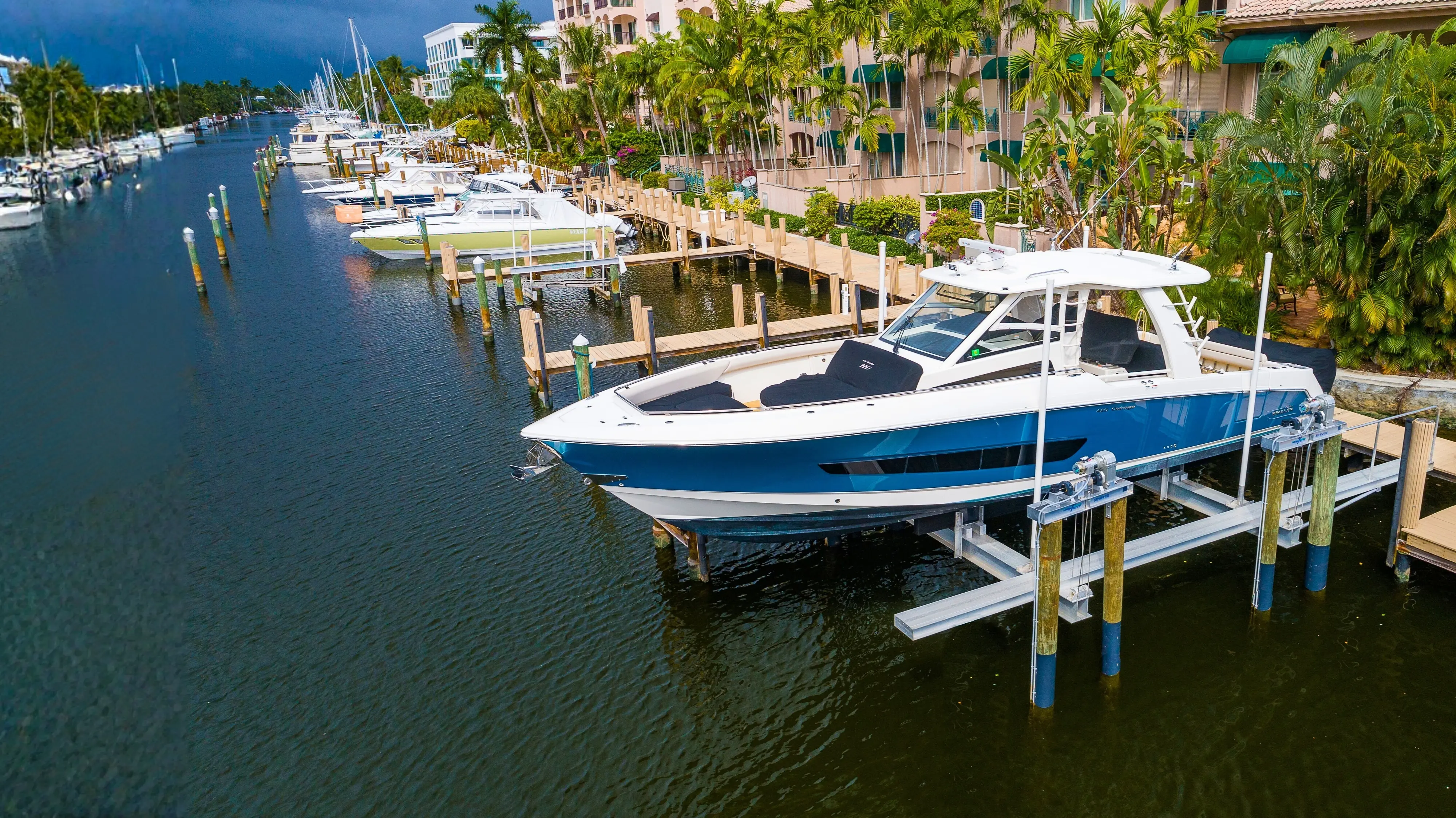
In many situations, removing the boat from the lift and relocating it to inland storage, dry storage, or a protected marina may be the safest option. Some owners may choose to lower the boat into the water and secure it in a sheltered location with proper dock lines. Others may receive specific recommendations from local marine professionals based on the waterfront environment.

There is no one-size-fits-all answer. The best approach depends on the boat, lift, dock, surrounding waterway, expected storm conditions, and available storage options. Owners should make this decision early, because haul-out and relocation options can become limited quickly once a storm is approaching.

ChatGPT Image May 7, 2026, 08_27_57 AM (5).png

Step 5: Raise the Lift Cradle if the Boat Is Removed

If the boat is removed from the lift, raising the lift cradle may help reduce the chance of damage from storm surge, wave action, and floating debris.

Elevating the cradle can help keep bunks, cables, and other lift components farther from rising water and debris carried by storm surge. This may reduce the likelihood that debris will interfere with cables, pulleys, tracks, or structural components.

Before raising the cradle, make sure the boat has been fully removed and that the lift is operating normally. Do not operate the lift if cables, pulleys, electrical systems, or structural components appear damaged.

ChatGPT Image May 7, 2026, 08_24_22 AM.png

Step 6: Turn Off Power to the Lift System

Before severe weather arrives, turn off power to the boat lift system. Boat lifts operate using electrical power, and storms can expose motors, controls, wiring, switches, and electrical connections to moisture, flooding, power fluctuations, and other hazards.

Disconnecting power helps reduce the risk of electrical damage and unsafe operation during the storm. It also helps prevent accidental activation while conditions are dangerous.

After the storm, do not restore power or operate the lift if electrical components were submerged, damaged, or exposed to flooding. Have the system inspected by a qualified marine lift technician before use.

After the Storm: Inspect Before Operating

After a hurricane or severe storm, visually inspect the lift before operating it. Do not assume the lift is safe to use simply because it appears to be standing.

Look for shifted pilings, bent beams, damaged bunks, loose hardware, frayed cables, damaged pulleys, debris caught around cables or tracks, cracked brackets, damaged guide poles, submerged controls, electrical damage, or anything that appears out of alignment.

If the lift does not operate normally, makes unusual sounds, moves unevenly, trips breakers, or shows visible damage, stop immediately and contact a Neptune dealer or qualified marine lift technician. Operating a damaged lift can create additional risk to the boat, lift, dock, and operator.

When to Call a Neptune Dealer

A Neptune dealer or qualified marine lift technician should be contacted if you notice visible storm damage, cable wear, electrical issues, structural movement, damaged bunks, bent components, or debris caught in the lift system.

You should also call a professional if your lift was exposed to storm surge, if electrical components were submerged, if the cradle appears out of alignment, or if you are unsure whether the system is safe to operate.

Professional inspection is especially important for larger lifts, yacht lifts, elevator lifts, boathouse lifts, and any installation where structural loads are significant.

Hurricane Preparation Checklist

Use this checklist as a general starting point before hurricane season and before severe weather.

Before hurricane season: inspect cables, pulleys, winders, bunks, fasteners, electrical connections, guide poles, and structural components. Schedule professional service if anything appears worn, corroded, loose, or damaged.

Before a storm: remove or secure dock furniture, fishing gear, loose equipment, coolers, cushions, tools, and other unsecured items. Decide whether the boat should be removed, relocated, lowered, or otherwise secured based on local guidance and storm conditions.

If the boat is removed: raise the lift cradle to help keep components farther from rising water and floating debris.

Before conditions deteriorate: turn off power to the lift system.

After the storm: inspect the lift before use. Do not operate the system if anything appears damaged, submerged, shifted, or out of alignment.

Frequently Asked Questions

In many cases, boat owners remove the vessel from the lift and relocate it to inland storage, dry storage, or a protected marina before a severe storm. The safest approach depends on storm severity, surge forecast, local guidance, insurance requirements, dock layout, vessel size, and available storage options.

A local marine professional or Neptune dealer can help recommend the best approach for your specific waterfront environment.

Yes. Hurricanes and severe storms can damage any waterfront structure, including docks, pilings, seawalls, lifts, electrical systems, and boats. Preparation can help reduce risk, but it cannot guarantee protection from severe weather.

Yes. Power should be turned off before severe weather arrives. Disconnecting power helps reduce the risk of electrical damage and unsafe operation during the storm.

If electrical components are submerged or damaged, do not restore power or operate the lift until it has been inspected by a qualified technician.

Inspect cables, pulleys, sheaves, winders, bunks, cradle components, guide poles, fasteners, motors, control units, electrical connections, pilings, and dock attachment points. Look for corrosion, fraying, loose hardware, worn components, or signs of misalignment.

If the boat has been removed from the lift, raising the cradle may help keep lift components farther from storm surge, wave action, and floating debris. Do not raise or operate the lift if it appears damaged or unsafe.

Remove or secure dock furniture, coolers, fishing gear, cleaning supplies, cushions, portable equipment, loose dock lines, ladders, buckets, and any other items that could become airborne or floating debris.

Do not operate the lift until it has been visually inspected. If the lift was exposed to storm surge, flooding, floating debris, electrical damage, or structural movement, have it inspected by a Neptune dealer or qualified marine lift technician before use.

A Neptune dealer or qualified marine lift technician should inspect the lift if there is visible damage, electrical exposure, cable wear, structural movement, or any question about whether the system is safe to operate.